
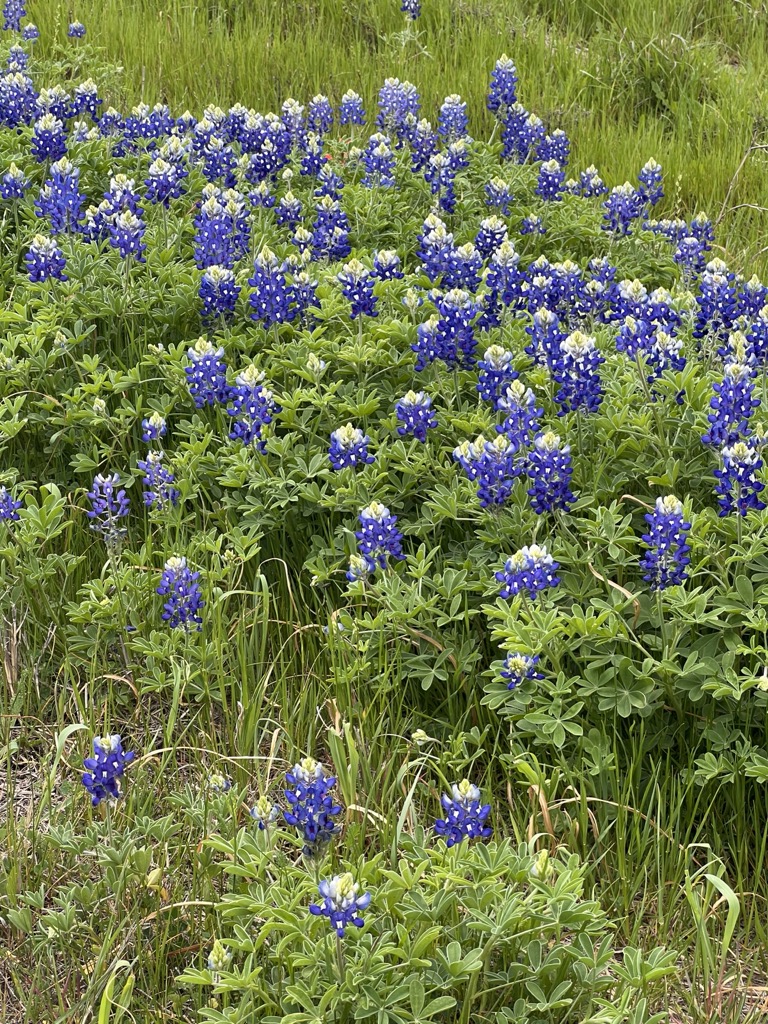
Personal iPhone Photo of Texas Bluebonnets
The Reflection of Blue
For now we see
in a mirror, dimly,
but then face to face.
Now I know in part,
but then I will know fully,
even as I was also fully known.I CORINTHIANS 13:12
World English Bible (WEB)
We see in a glass dimly
The Light casts the reflection
of what we see
in a glass dimly….
The blue of Blue Jay wings is a reflection of what itself is not blue. Rather, wings of birds that look blue are composed of light-scattering microscopic structures that reflect the lightrays our eyes perceive as blue and absorb or block the light rays of other colors.
Most scientists credit evolution for the magnificently complex and Master-fully engineered structuring that reflects light waves of blue light. But I do not!
GOD Said, “Let there Be LIght, and it was so.” A well-educated physician – engineer – scientist, I find no evidence against this Belief: GOD Created Light and GOD Used His Intelligent Design to Reflect the color blue to our human eyes primarily by complex scientific structures. What do you believe?
Blue pigment reflects the lightwaves of blue because the pigment is blue. Life forms found to have blue pigment are exceedingly rare, exceedingly. For example, there is one butterfly that makes blue pigment. All the other “blue” butterflies are shaped with water-resistent butterfly wing scales that reflect lightwaves that look blue to human eyes. They absorb or block the other lightwaves. This has been called a hallway of mirrors by some. Flowers and some other creatures have pigments that are combined and structured to absorb and even reflect to absorb lightwaves such that blue colors are seen as mirages. Less than 10% of all flowers is blue or even bluish.
The bluebonnets we Texans get to see each Spring are not simply blue. Rather, they have pigments called anthocyanins and anthoxantins that mix together to produce colors ranging from blue to purple, influenced by the environmental pH of the flower.
REFERENCES
YouTube Video: Why is Blue so Rare in Nature?
YouTube WhyIsBlueSoRareInNature
YouTube Video: Why do Green Tree Frogs Change Color
flheadwatersfoundation.org_green-tree-frogs
YouTubeVideo: 12 Elusively Blue Animals: The Rarest Creatures of All
Treehugger.com_elusively-blue-animals
Blue: Nature’s Rarest Flower Color
BotanicalGarden.Berkeley.edu_blue-natures-rarest
